Inventory Integration Failures: The Hidden Conversion Killer in Multi-Channel Retail
Inventory integration failures quietly kill conversions in multi-channel retail by causing oversells, stockouts, delays, and lost trust. Here's how to fix the systems behind the damage.
Free tool
Grade your website before you keep reading
Most readers want a quick benchmark first. Start with the free Website Grader, then come back to this article with a clearer sense of what to fix.
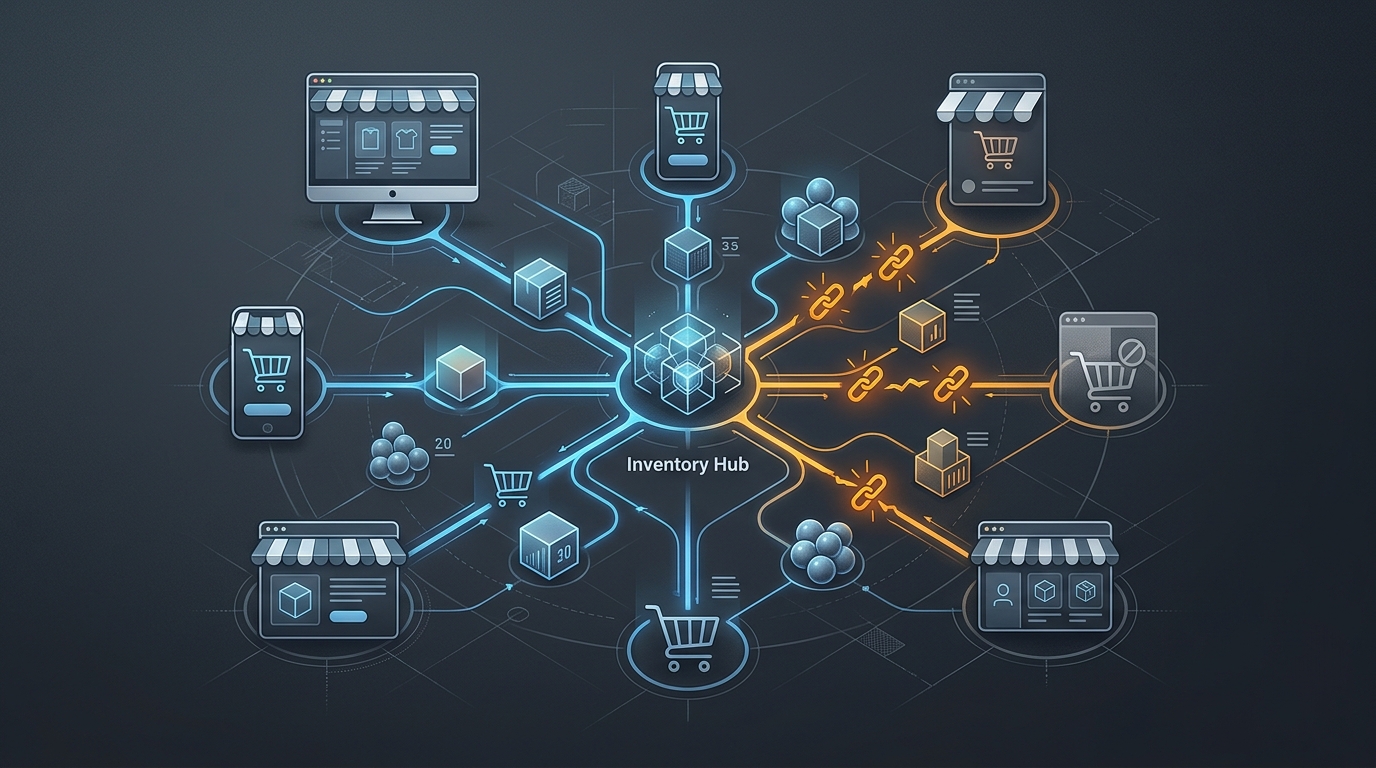
# Inventory integration failures: the hidden conversion killer in multi-channel retail
Most e-commerce teams know the obvious conversion killers.
Slow pages. Weak product pages. Clunky checkout. High shipping costs.
But there is another one that does damage long before the customer reaches the buy button: broken inventory integration.
If you sell across Shopify, Amazon, marketplaces, social commerce, and a physical store, inventory is no longer a back-office detail. It is part of the customer experience. The moment stock data falls out of sync, the cracks start showing everywhere: items marked available that are already gone, bestsellers hidden because stock never updated, delayed fulfilment, split shipments, awkward cancellation emails, refund requests, and customers who do not come back.
That is why inventory integration failures are one of the most expensive e-commerce mistakes multi-channel retailers make. They do not just create operational noise. They quietly reduce conversion rate, damage trust, and make every marketing pound work less effectively.
why this problem is easy to underestimate
Inventory issues often sit between teams.
Marketing sees traffic and ad spend. Ecommerce sees product pages. Operations sees fulfilment delays. Customer support sees complaints. Finance sees margin pressure. Everyone feels the pain, but no single dashboard tells the full story.
So the business ends up treating the symptoms instead of the cause.
A retailer notices rising cancellations and thinks the problem is courier performance. Another sees weak conversion on popular products and assumes pricing is off. A third blames marketplace volatility. In reality, the issue may be much simpler: the stock number a customer sees is not the truth.
In multi-channel retail, even a small lag creates real commercial damage. If one system updates every few minutes while another updates in batches, that gap is enough to cause overselling during a busy promo window. If bundles, returns, warehouse transfers, or point-of-sale transactions are not syncing properly, the inventory picture gets distorted fast.
Customers feel that distortion immediately.
what inventory integration failure actually looks like
This problem is bigger than "stock did not update."
In practice, inventory integration failures usually show up in a few familiar ways:
The result is a retail business making decisions on bad data.
And bad stock data spreads. It affects merchandising, paid campaigns, replenishment, fulfilment promises, and customer service workload. What starts as a systems issue becomes a revenue issue.
how broken inventory data hurts conversion
Let us make the connection clear.
Inventory integration failures hurt conversion in at least five ways.
1. customers hit false availability
A shopper sees "in stock," adds the product to cart, starts checkout, then gets told the item is unavailable. That is not a minor inconvenience. It is a trust break.
Sometimes the customer hunts for an alternative. Often they leave.
Even when they stay, you have created friction at the worst possible moment: right when purchase intent was strongest.
2. high-demand products disappear when they should be selling
The opposite problem is just as bad. Products stay marked out of stock because systems do not sync replenishment correctly.
That means your most wanted items can be invisible for hours or days while paid traffic lands on dead product pages. You are paying to attract demand and then blocking it with stale inventory data.
3. delivery promises become unreliable
When inventory is fragmented, fulfilment logic gets messy. Orders may be routed to the wrong warehouse, split unnecessarily, or delayed while teams verify what stock actually exists.
Customers do not care whether the issue came from your ERP, OMS, POS, or marketplace connector. They just remember that delivery was slower than promised.
That memory lowers repeat purchase intent.
4. customer confidence drops before checkout
Shoppers are good at sensing when a store feels unreliable.
Maybe stock counts look odd. Maybe products flip in and out of availability. Maybe reviews mention cancelled orders. Maybe the site says "ships today" but support says something else. These signals stack up. Confidence erodes quietly, and conversion rate follows it down.
5. teams become too cautious
When the inventory picture cannot be trusted, retailers compensate manually. They add larger stock buffers, hold back units, slow promotions, and limit channel exposure.
That protects against overselling, but it also suppresses revenue. You are effectively under-selling because your systems cannot support confident selling.
the hidden cost of overselling
Overselling is usually the first risk people mention, and for good reason. It is the clearest symptom of poor inventory integration.
But the real cost is not the refund itself. It is everything around it.
There is the support ticket. The apology email. The payment processing cost. The scramble to offer an alternative. The hit to seller ratings on marketplaces. The lost trust. The chance that the customer never returns.
Now multiply that by every busy launch, payday weekend, flash sale, or seasonal spike.
Retailers often think of overselling as an occasional embarrassment. In reality, it is a conversion tax. Every instance teaches customers to hesitate next time.
Want a fast score before you touch the site?
Use the free Website Grader to get an instant trust, UX, SEO, and performance score, then decide if you need the full AI review.
Open the Free Website Grader →common causes behind the failure
Most inventory integration failures are not caused by one dramatic systems collapse. They come from a stack of smaller mistakes.
relying on batch updates instead of near real-time sync
Batch processing might be fine for slower operations. It is not fine when multiple channels are selling the same item quickly.
If Amazon, Shopify, TikTok Shop, and POS are all drawing from the same pool, timing matters.
treating each channel as a separate stock universe
This is common in growing retail businesses. A new channel gets added fast, then connected loosely, then managed with workarounds. Over time, nobody is fully sure which system is the source of truth.
That uncertainty is expensive.
weak handling of complex inventory logic
Bundles, pre-orders, returns, damaged stock, transfers, backorders, and multi-location fulfilment all add complexity. If your integration layer handles only the simple cases, the exceptions will eventually run the show.
no operational ownership
Inventory accuracy is both a technical and commercial function. When nobody owns it end to end, issues linger. Teams keep working around them until the workarounds become the process.
how to fix it before it keeps hurting revenue
The good news is this problem is fixable. But it needs more than adding another app and hoping the sync improves.
choose a real source of truth
One system must own available-to-sell inventory. Not theoretically. Operationally.
That system should feed your channels, fulfilment decisions, and reporting logic consistently. If different teams trust different numbers, you do not have a source of truth.
map the full inventory lifecycle
Do not stop at "order comes in, stock goes down."
Map reservations, edits, cancellations, returns, bundles, transfers, warehouse receipts, and in-store sales. If the lifecycle is not documented, the integration will miss important edge cases.
prioritise near real-time updates for fast-moving SKUs
Not every product needs the same sync frequency. But fast-moving and high-risk SKUs should not wait on slow update cycles. The more demand volatility you have, the less tolerance you have for lag.
build channel-specific buffers intentionally
Safety stock can be useful. So can channel allocation. But they should be strategic, not panic-driven. If your only defence against bad integration is hiding stock everywhere, you are masking the problem, not fixing it.
monitor business signals, not just system uptime
A connector can be "working" while the business is losing money.
Track signals like:
These are the numbers that reveal whether your inventory setup is helping or hurting revenue.
what strong inventory integration gives you
When inventory integration works properly, the gains are not only operational.
You get cleaner product availability, better customer trust, fewer cancelled orders, more accurate fulfilment promises, and more confidence when scaling into new channels. Marketing becomes more efficient because traffic lands on sellable products. Merchandising improves because stock visibility is clearer. Operations spends less time firefighting.
Most importantly, customers stop running into avoidable surprises.
That matters because conversion is rarely won by one dramatic improvement. More often, it is protected by removing friction that should never have existed in the first place.
the mistake behind the mistake
The deeper e-commerce mistake is assuming inventory integration is an IT project.
It is not.
It is a conversion issue, a customer experience issue, and a growth issue. If your retail business depends on selling across multiple channels, inventory accuracy is part of the storefront whether you like it or not.
Customers may never see your systems architecture. They will absolutely feel its failures.
And once they do, they usually do not blame the integration. They blame the brand.
final thought
Multi-channel retail creates real opportunity. It also creates more ways for weak systems to leak revenue.
If your team is seeing unexplained conversion drops, rising cancellations, inconsistent stock levels, or fulfilment friction, do not treat those as separate problems. There is a good chance they trace back to the same root cause: inventory integration that is too slow, too fragmented, or too unreliable to support the way you sell.
Fix that, and you do more than clean up operations.
You make it easier for customers to trust you enough to buy.
Turn this article into a real benchmark
Start with the free Website Grader for an instant score, then move to the full AI scan when you want page-level recommendations.
Open the Free Website Grader →