The personalization paradox: why over-targeting is killing e-commerce loyalty in 2026
We were promised a web that would feel more helpful because it understood us better.
Free tool
Grade your website before you keep reading
Most readers want a quick benchmark first. Start with the free Website Grader, then come back to this article with a clearer sense of what to fix.
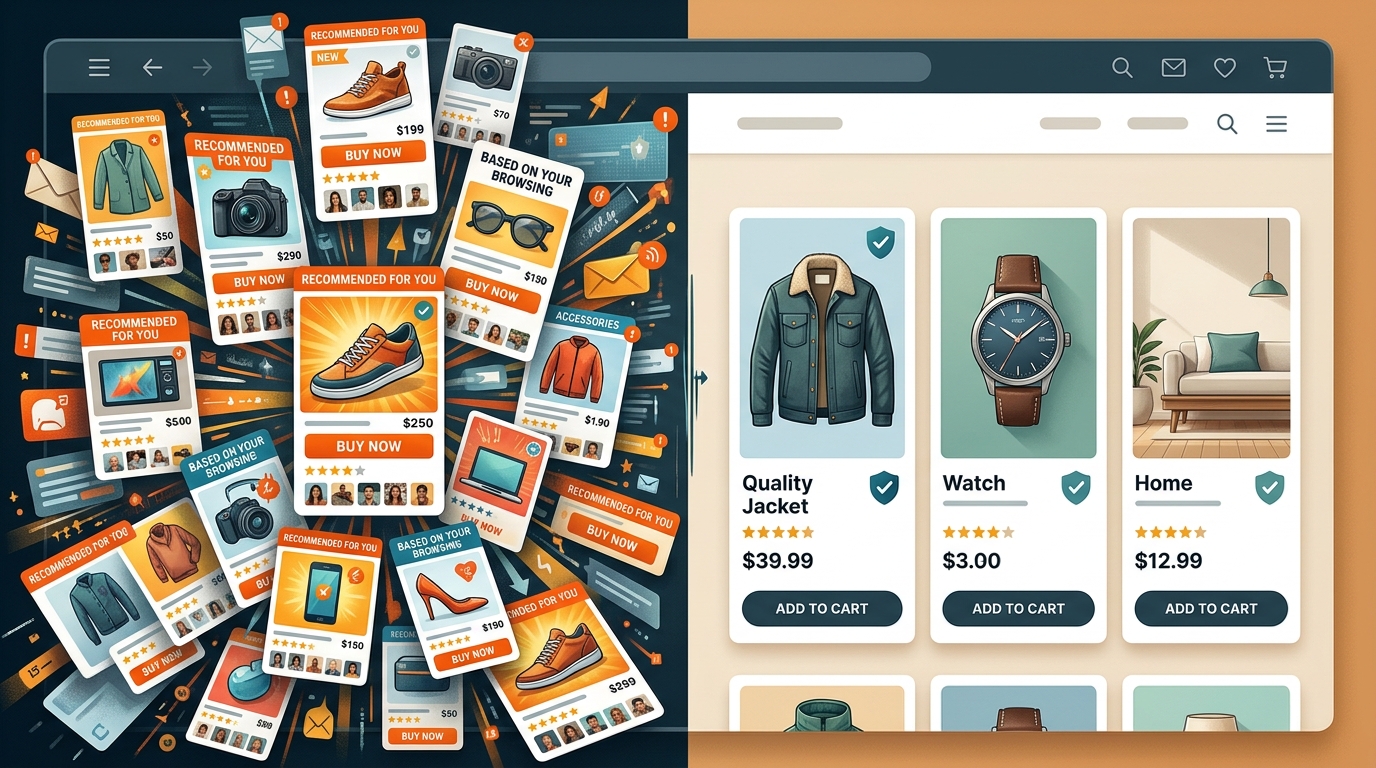
# The personalization paradox: why over-targeting is killing e-commerce loyalty in 2026
We were promised a web that would feel more helpful because it understood us better.
Sometimes that happened. A useful recommendation, a remembered basket, a quick reorder prompt, those things can make shopping easier.
But there is a point where personalization stops feeling helpful and starts feeling intrusive. A lot of e-commerce brands are running into that wall now. The harder they push targeted suggestions, dynamic offers, and hyper-specific prompts, the less comfortable customers feel.
That is the personalization paradox.
The tools are getting more powerful, yet the experience can feel worse.
Why over-targeting backfires
Most shoppers are not thinking in technical terms when they browse an online store. They are not mentally scoring your recommendation engine or your customer data strategy. They are reacting at gut level.
If the site feels relevant, smooth, and respectful, they stay.
If it feels like the store is watching every move, they pull back.
There is a big difference between:
One feels useful. The other feels strange.
The problem is not personalization itself. The problem is visible overreach.
When a website appears too eager to prove how much it knows, it creates tension. The shopper stops feeling understood and starts feeling managed.
Trust is more fragile than conversion teams think
This is where many optimization strategies get a bit too narrow.
A short-term conversion lift can hide long-term damage. Maybe a hyper-targeted offer increases clicks today. Fine. But if the experience feels manipulative, the customer may be less likely to return, less likely to browse calmly, and less likely to trust future prompts.
That matters because loyalty is not built only on relevance. It is built on comfort.
People come back to stores that feel easy to shop, not stores that feel like they are trying to outsmart them.
Past behaviour is not always current intent
A lot of personalization logic leans too heavily on historical behaviour.
If I bought formalwear last month, that does not mean I want more formalwear today. If I spent time comparing standing desks last week, that does not mean I want desk accessories forever. Context changes fast. Mood changes fast. Need changes fast.
This is one reason aggressive personalization often feels off. It assumes that old signals are permanent truths. They are not.
Good merchandising responds to what a customer seems to want now. Bad personalization keeps dragging the past into the present.
A better approach: lighter, more respectful guidance
The better e-commerce experiences in 2026 are not necessarily using less intelligence. They are using it with more restraint.
Instead of trying to predict every desire, they are creating space for discovery. Instead of forcing relevance, they are offering guidance that feels optional.
That might look like:
Notice the difference. These prompts support the shopper without pretending to know them too well.
That is the sweet spot. Helpful, but not clingy.
What smarter brands are doing instead
1. Using lighter context signals
Not every relevant experience needs deep behavioural profiling.
Sometimes time of day, device type, local weather, source traffic, or shopping stage are enough to make useful decisions. A customer arriving from a buying guide may need comparison support. A returning customer on mobile may need a faster path to reorder.
This kind of context can improve usability without crossing the line into overfamiliarity.
2. Giving shoppers more control
One of the easiest trust wins is giving people some say in the experience.
Let them refine recommendations. Let them hide irrelevant suggestions. Let them choose whether they want similar items, expert picks, or something unexpected. Even small controls can make the whole system feel less coercive.
A shopper who feels in charge is more likely to engage.
3. Focusing on discovery, not just the sale
A lot of personalization is built to close fast. That is understandable, but short-sighted.
The better question is whether the customer enjoyed finding what they needed. If browsing feels pleasant and confident, conversion often follows anyway. And even when it does not happen on the first visit, you have protected the relationship.
That matters more than squeezing every possible click out of a single session.
Signs your personalization may be doing too much
If you are not sure whether your store has crossed the line, look for these warning signs:
None of these issues guarantee failure on their own. But stacked together, they can make an experience feel oddly tense.
And tense is not how people want to shop.
Personalization still matters, just not in the way many brands think
This is not an argument for generic storefronts.
Personalization still has real value. Remembered preferences, smarter sorting, relevant replenishment reminders, and simplified repeat purchases all help. The lesson is not "stop personalizing." The lesson is "stop making the personalization itself the star of the experience."
If shoppers notice how hard your store is working to target them, you may already be over the line.
The best personalization often disappears into the background. It feels like ease, not surveillance.
The practical takeaway
In 2026, the strongest e-commerce brands will not necessarily be the ones with the biggest pile of customer data. They will be the ones that know when to use data lightly.
That restraint is not a weakness. It is good judgment.
Be useful. Be relevant. But leave shoppers enough room to feel like they are choosing, not being steered.
That is what builds trust, and trust is still doing more work than any recommendation engine can.
Turn this article into a real benchmark
Start with the free Website Grader for an instant score, then move to the full AI scan when you want page-level recommendations.
Open the Free Website Grader →