Local SEO for hybrid service-retail businesses in 2026
The line between retail and service has gotten blurry, and honestly, that is good news for local businesses.
Free tool
Grade your website before you keep reading
Most readers want a quick benchmark first. Start with the free Website Grader, then come back to this article with a clearer sense of what to fix.
# Local SEO for hybrid service-retail businesses in 2026
The line between retail and service has gotten blurry, and honestly, that is good news for local businesses.
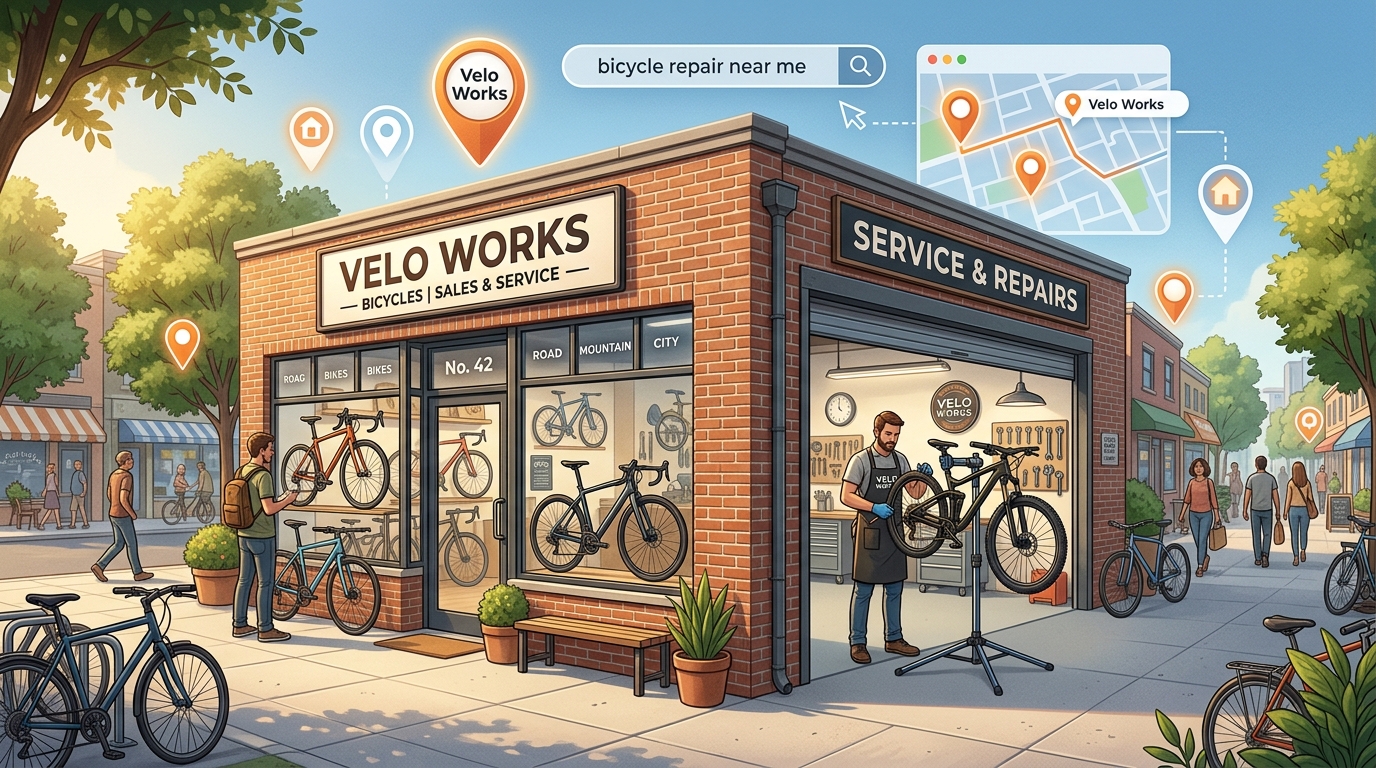
A bike shop is not just a place that sells bikes. It also handles repairs, fittings, upgrades, and advice. A florist might sell bouquets, run wedding consultations, and host workshops. A salon might retail products while also booking treatments. More businesses now sit in this middle ground where they sell something and do something.
That shift matters for local SEO.
Google is getting better at understanding businesses that solve a complete problem, not just one narrow transaction. If your website treats your products and services like separate worlds, you make it harder for search engines to understand what you offer. You also make it harder for customers to trust that you can help them right now.
People search for solutions, not neat categories
A local search rarely arrives in a tidy little box.
Someone searching for "broken bike chain near me" may need a repair, a replacement part, or a shop that can talk them through both. Someone searching for "bridal flowers Swanley" may want inspiration, delivery, setup, and an in-person consultation. Google has become much better at spotting that mixed intent.
That means the businesses with an edge are often the ones that can serve both sides of the need. The catch is that your site has to make that obvious.
If your repair services are buried on one page and your products are buried somewhere else, Google may not connect the dots. Neither will customers who land on the wrong page first.
Stop separating products and services so aggressively
A common site structure looks tidy but works against you: one top-level section for "Shop" and another for "Services," with barely any connection between them.
From an SEO point of view, that can weaken the story your site is telling.
If you offer brake alignment, mention the brake pads and maintenance kits you carry. If you repair punctures, talk about the sealant, tubes, and tubeless kits available in store. If you sell skincare and also offer facials, your treatment pages should mention the products used and stocked on-site.
You are not trying to stuff in keywords. You are trying to make one simple point clear: we can help with the problem from start to finish.
That kind of clarity helps people convert, and it helps Google understand the real shape of your business.
Use local business schema with more intention
Schema will not rescue a weak site on its own, but it does help search engines process what is already there.
For hybrid businesses, the basics matter:
Think of schema as support, not theatre. The point is not to sound clever. The point is to reinforce the same message your page structure, copy, and internal links are already giving.
If your business repairs devices and sells accessories, your site should make that relationship visible in plain English first. Then schema can strengthen it.
Show what actually happens in your space
This is where a lot of local businesses still miss easy wins.
Generic blog posts like "Top 10 maintenance tips" are not useless, but they do not say much about what your business is like in real life. Google and customers both respond better to content with some texture.
Want a fast score before you touch the site?
Use the free Website Grader to get an instant trust, UX, SEO, and performance score, then decide if you need the full AI review.
Open the Free Website Grader →Write about the work that actually happens in your space.
Maybe a customer came in for a simple puncture repair and ended up switching to tubeless after a quick conversation with your staff. Maybe you hosted a small in-store workshop that helped first-time buyers choose the right setup. Maybe your florist team walked a client through the difference between buttonholes, table pieces, and ceremony arrangements.
That kind of content is specific. It sounds like a real business because it is one.
Photos help too. Shots of your workshop area, fittings, consultations, shelves, events, and team interactions give search engines and visitors stronger local signals than generic stock imagery ever will.
A pure e-commerce competitor cannot fake local presence very well. You can lean into it.
Get more precise about place
A town name by itself is often not enough anymore.
If your business is near the station, say so. If customers often find you on their way to another well-known place, mention that naturally. If you collaborate with nearby businesses or take part in local events, work that context into your site.
This does two things.
First, it helps search engines place you more precisely. Second, it makes your business feel grounded to actual humans. "Near Swanley station" is easier to picture than a generic town mention repeated six times.
That does not mean stuffing every paragraph with location names. It means writing like a local business that actually belongs to the area.
Your Google Business Profile needs to reflect the hybrid model too
Your website is not the only place this matters.
Your Google Business Profile should also reflect the fact that you both sell and serve.
That means:
If people regularly mention repairs, fittings, consultations, or installations in reviews, that helps reinforce what kind of business you are. Encourage that naturally after a completed job.
The real opportunity
None of this is about chasing the latest SEO phrase.
It is about making your business legible online in the same way it already works offline. If you sell and serve, say both clearly. If customers experience your business in person, show that. If you are rooted in a specific neighborhood, write like it.
The businesses that do this well are easier to find because they are easier to understand.
And when local SEO works, that is usually what is happening under the hood. Google understands the business faster, and customers do too.
If you run a hybrid service-retail business, that clarity is one of the easiest competitive advantages you can build right now.
Turn this article into a real benchmark
Start with the free Website Grader for an instant score, then move to the full AI scan when you want page-level recommendations.
Open the Free Website Grader →