Strategic Website Redesign Planning: The 2026 Roadmap for Business Growth
A comprehensive guide to planning a high-ROI website redesign in 2026, focusing on strategy, UX, and SEO migration.
Free tool
Grade your website before you keep reading
Most readers want a quick benchmark first. Start with the free Website Grader, then come back to this article with a clearer sense of what to fix.
# Strategic Website Redesign Planning: The 2026 Roadmap for Business Growth
Redesigning a website is more than just a fresh coat of paint. In 2026, it is a strategic repositioning of your digital asset to align with changing user behaviors, AI-driven search environments, and stricter accessibility standards. A successful redesign doesn't just look better; it performs better by driving more qualified leads and reducing friction in the customer journey.
Why Redesign Planning Fails (And How to Avoid It)
Most redesigns fail before a single line of code is written because they start with aesthetics rather than objectives. Without a clear roadmap, projects suffer from scope creep, missed deadlines, and a final product that doesn't actually solve business problems.
To ensure your redesign delivers a high ROI, you must treat it as a business transformation project.
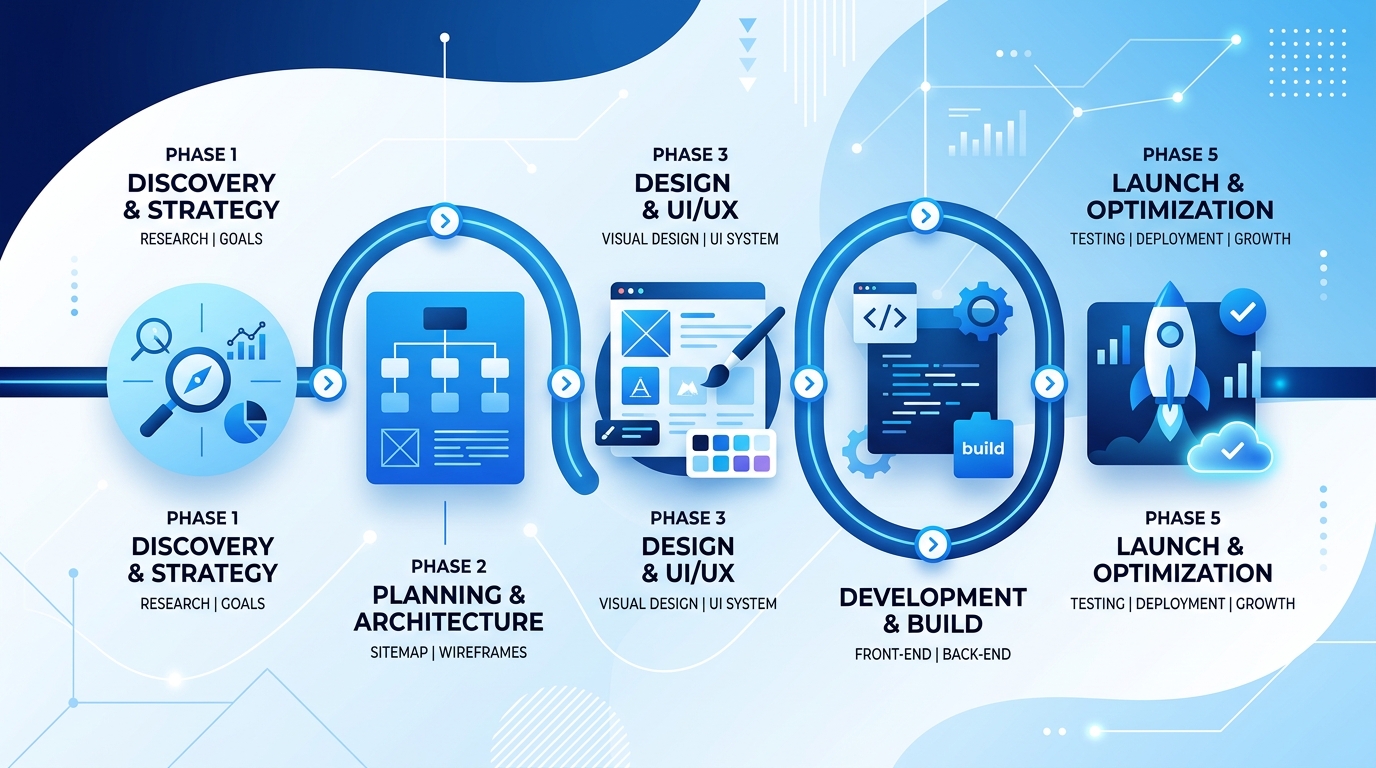
Phase 1: Audit and Goal Setting
Before looking forward, look at what you have. Audit your current site to identify:
**Define your KPIs:** Are you looking to increase conversion rates by 20%? Reduce bounce rates on mobile? Or perhaps optimize for "Answer-First" UX to better serve AI search agents?
Phase 2: User Experience (UX) and Information Architecture
In 2026, UX is about speed and clarity. Users no longer "browse"—they "seek." Your information architecture should be designed around the most common user intents.
Phase 3: Content Strategy and SEO Migration
A redesign is the perfect time to prune low-quality content and double down on "Information Gain." Search engines (and AI models) now prioritize content that offers unique perspectives or data not found elsewhere.
**The Migration Plan:**
Phase 4: Technical Excellence and Compliance
Technical performance is a foundational ranking factor in 2026. Your redesign must prioritize:
Phase 5: Launch and Continuous Optimization
The launch is not the finish line; it’s the starting block. Use the first 30 days post-launch to:
A website should be a living document. By planning strategically, you ensure that your 2026 redesign provides a solid foundation for years of business growth.
Turn this article into a real benchmark
Start with the free Website Grader for an instant score, then move to the full AI scan when you want page-level recommendations.
Open the Free Website Grader →