The Zero-Day Redesign: AI-Powered Landing Page Architecture
How generative UX and AI-first layout tools are enabling 'Zero-Day' landing pages—perfectly optimized from the very first visitor.
Free tool
Grade your website before you keep reading
Most readers want a quick benchmark first. Start with the free Website Grader, then come back to this article with a clearer sense of what to fix.
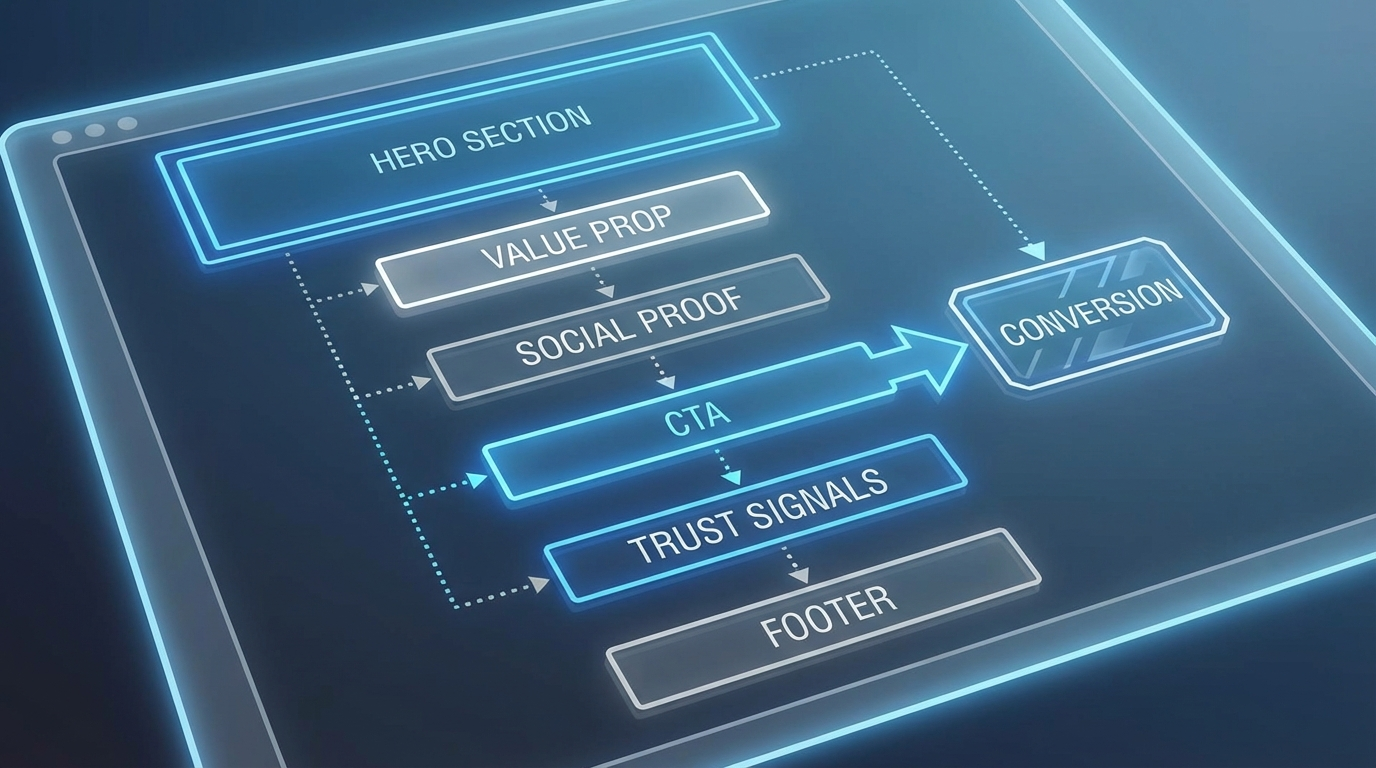
# The Zero-Day Redesign: AI-Powered Landing Page Architecture
Building a landing page used to be a long, iterative process. You'd launch a "v1," wait for traffic to hit, analyze heatmaps, and then make small, incremental changes (A/B testing) to improve conversion rates over months. This was the era of "Launch and Learn."
In 2026, we’ve entered the era of the **Zero-Day Redesign**.
**AI-powered architecture** is now capable of delivering landing pages that are perfectly optimized from the very first visitor. By synthesizing billions of historical data points and simulating user behavior with synthetic agents, businesses can skip the "v1" growing pains entirely.
What is Zero-Day Architecture?
Zero-Day Architecture refers to a landing page layout that is generated and pre-optimized based on:
The Shift from A/B Testing to Real-Time Evolution
While A/B testing is still a valuable tool, it’s increasingly being replaced by **Multi-Armed Bandit (MAB) algorithms**. These AI models don't just test two versions of a page; they test dozens of micro-variations simultaneously and shift traffic to the "winning" components in real-time.
For example, if a "social proof" section performs better for visitors from LinkedIn but a "technical spec" section works better for those from a developer forum, the landing page will automatically reconfigure its architecture to serve the right content to the right person at the right moment.
Want a fast score before you touch the site?
Use the free Website Grader to get an instant trust, UX, SEO, and performance score, then decide if you need the full AI review.
Open the Free Website Grader →Key Principles of AI-First Landing Pages in 2026
1. The Death of the 'Fold'
In a mobile-first, thumb-driven world, the traditional concept of "above the fold" is dead. AI architecture focuses on **Scroll-Triggered Engagement**. Components are loaded and animated based on the user's scrolling speed, ensuring that the most important information is always at the center of their attention.
2. Conversational Conversion
Landing pages are moving away from static forms toward **Conversational Interfaces**. Instead of a long form with 10 fields, AI-powered pages use a single, intelligent input field or a voice-enabled assistant that gathers the necessary information through a natural dialogue. This "Zero-Form" economy is significantly reducing lead-gen friction.
3. Machine Experience (MX) Optimization
It's not just about humans anymore. Modern landing pages are built for **AI Agents**. They include structured data (JSON-LD) and clear semantic hierarchies that allow AI Overviews and agentic search tools to easily extract and cite your core value proposition.
Building for the Future
The businesses that thrive in 2026 will be those that embrace **Anticipatory Design**. Instead of asking "What did the user do?", they will ask "What is the user about to do?".
Zero-Day landing pages are the foundation of this proactive strategy. By leveraging AI to build architecture that adapts, learns, and converts from the jump, you’re not just building a page—you’re building a performance engine.
*Ready to skip the learning curve? Discover how [SiteInsight AI](https://websitereviewai.com) uses predictive architecture to build high-converting experiences from day one.* ✨
Turn this article into a real benchmark
Start with the free Website Grader for an instant score, then move to the full AI scan when you want page-level recommendations.
Open the Free Website Grader →