The Shift to Answer Engine Optimization (AEO): Future-Proofing Your Content for 2026
Search as we know it is undergoing its most radical transformation since the invention of the hyperlink. While traditional SEO focused on ranking a list of blue links,...
Free tool
Grade your website before you keep reading
Most readers want a quick benchmark first. Start with the free Website Grader, then come back to this article with a clearer sense of what to fix.
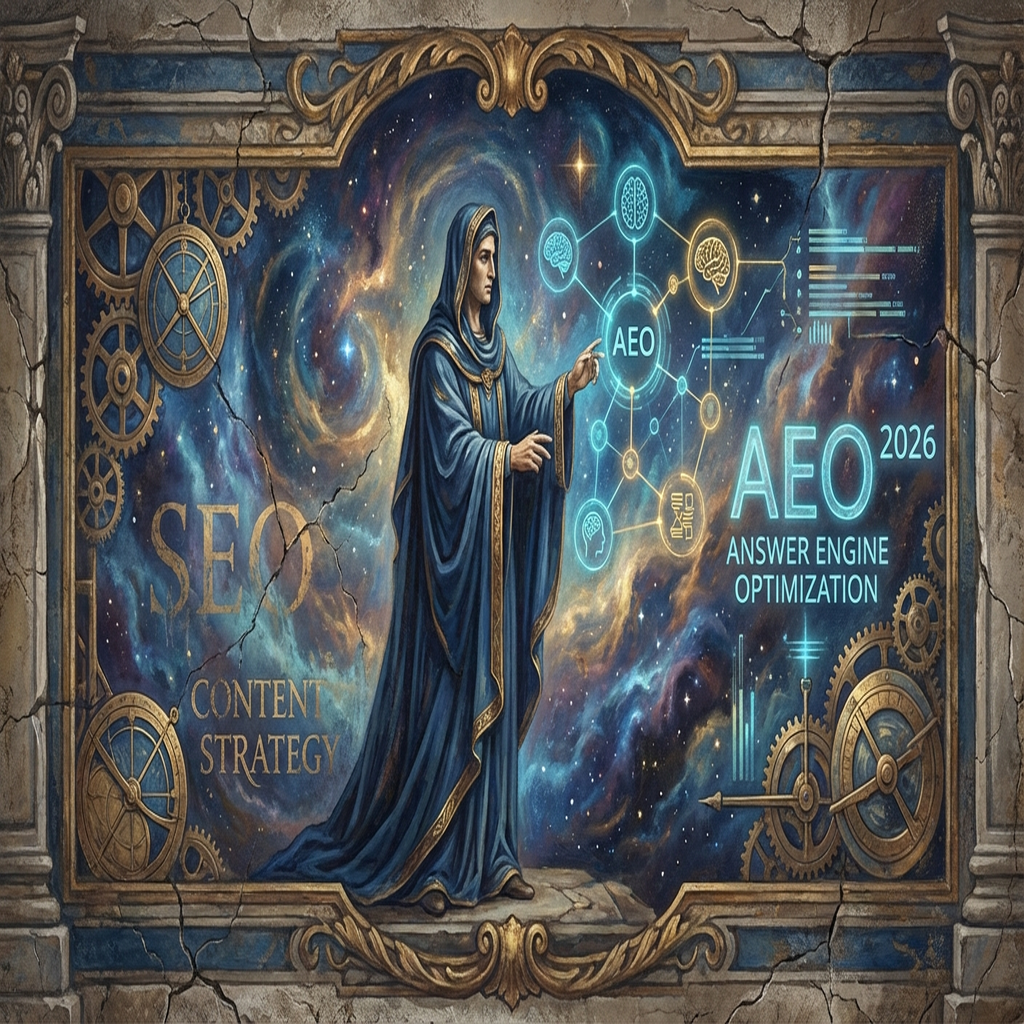
Search as we know it is undergoing its most radical transformation since the invention of the hyperlink. While traditional SEO focused on ranking a list of blue links, 2026 marks the definitive shift toward **Answer Engine Optimization (AEO)** and **Generative Engine Optimization (GEO)**.
Users no longer want to hunt through five different websites to find a single fact; they want the answer synthesized, summarized, and served instantly by AI. For businesses, this "discovery compression" means the goal is no longer just to rank—it's to be the *source* that the AI cites.
SEO vs. AEO: What’s the Difference?
Traditional SEO is building a library where you hope people find your book. AEO is making sure the librarian (the AI) reads your book to answer every patron's question.
* **SEO (Search Engine Optimization):** Focuses on technical health, keywords, and backlinks to rank individual URLs in Google or Bing.
* **AEO (Answer Engine Optimization):** Focuses on structured data, semantic clarity, and authority to ensure your content is chosen by Large Language Models (LLMs) like ChatGPT, Claude, and Google AI Overviews.
Why AEO is Non-Negotiable in 2026
The rise of "zero-click" searches has accelerated. When a user asks, *"What is the best security protocol for a remote SaaS team?"* Google's AI Overview or Perplexity will provide a 3-paragraph answer. If your brand isn't cited in those paragraphs, you effectively don't exist in that search journey.
AEO isn't about replacing SEO; it's about extending it. If SEO is the foundation (ensuring the AI can find you), AEO is the structure (ensuring the AI understands and trusts you).
4 Pillars of a Winning AEO Content Strategy
1. Answer-First Architecture
AI engines are trained to find direct answers. Structure your content using the "Inverted Pyramid" style:
* **The Answer:** Lead with a concise, 40-60 word summary that directly answers the primary question.
* **The Nuance:** Follow up with detailed context, data, and edge cases.
* **The Authority:** Link to primary sources and your own internal research to prove the answer's validity.
Want a fast score before you touch the site?
Use the free Website Grader to get an instant trust, UX, SEO, and performance score, then decide if you need the full AI review.
Open the Free Website Grader →2. Semantic Precision and H-E-E-A-T
Ambiguity is the enemy of AEO. Use clear, declarative language. Instead of saying *"Our tool helps with stuff,"* say *"SiteInsight AI automates conversion tracking for e-commerce stores."*
Furthermore, Google’s focus on **Experience, Expertise, Authoritativeness, and Trustworthiness (E-E-A-T)** has evolved. In 2026, the "Experience" part—first-hand accounts, original case studies, and unique data—is the only thing AI can't hallucinate or scrape from a generic source.
3. Technical AEO (Schema & LLMs.txt)
Just as you use a Sitemap for Googlebot, you must now use tools for the AI agents.
* **Advanced Schema:** Use `FAQSchema`, `HowToSchema`, and `ProductSchema` to make your data machine-readable.
* **LLMs.txt:** Adopt the emerging standard of providing a high-level summary of your site's knowledge specifically for AI crawlers.
4. Citation-Oriented Content
GEO (Generative Engine Optimization) prioritizes being *mentioned* over being *ranked*. This means your brand needs to appear in industry reports, podcasts, and third-party reviews. The more often your unique data is cited across the web, the more likely an AI is to view you as a "single source of truth."
Measuring Success: The New KPIs
In the AEO era, "Total Organic Traffic" is a vanity metric if it's mostly bots. Instead, track:
* **AI Visibility Share:** How often your brand appears in AI Overviews.
* **Citation Frequency:** How many unique AI responses link back to your site as a source.
* **Sentiment Alignment:** Is the AI describing your product the way you intended?
Conclusion
The shift to AEO is a shift toward quality. It rewards brands that stop writing for "keywords" and start writing for "clarity." By optimizing for the answer, you aren't just pleasing a machine—you're providing the most value to the humans behind the queries. 🌌✨🔮
Turn this article into a real benchmark
Start with the free Website Grader for an instant score, then move to the full AI scan when you want page-level recommendations.
Open the Free Website Grader →