AI-Powered Synthetic User Testing: Optimizing UX Without a Live Audience
Discover how AI-powered synthetic users can help you test and optimize your website's user experience (UX) faster, cheaper, and more accurately than traditional methods.
Free tool
Grade your website before you keep reading
Most readers want a quick benchmark first. Start with the free Website Grader, then come back to this article with a clearer sense of what to fix.
# AI-Powered Synthetic User Testing: Optimizing UX Without a Live Audience
Traditional user testing has always been a bottleneck. Whether you're a small business owner or a seasoned web designer, the process is familiar: recruit participants, schedule sessions, record results, and manually analyze hours of video. It’s slow, expensive, and often produces biased results.
In 2026, the paradigm is shifting. AI-powered synthetic user testing is emerging as the secret weapon for high-performing websites. By using large language models (LLMs) and behavioral simulation, you can now run thousands of "user" tests in minutes, pinpointing friction before a single real human lands on your page.
What is Synthetic User Testing?
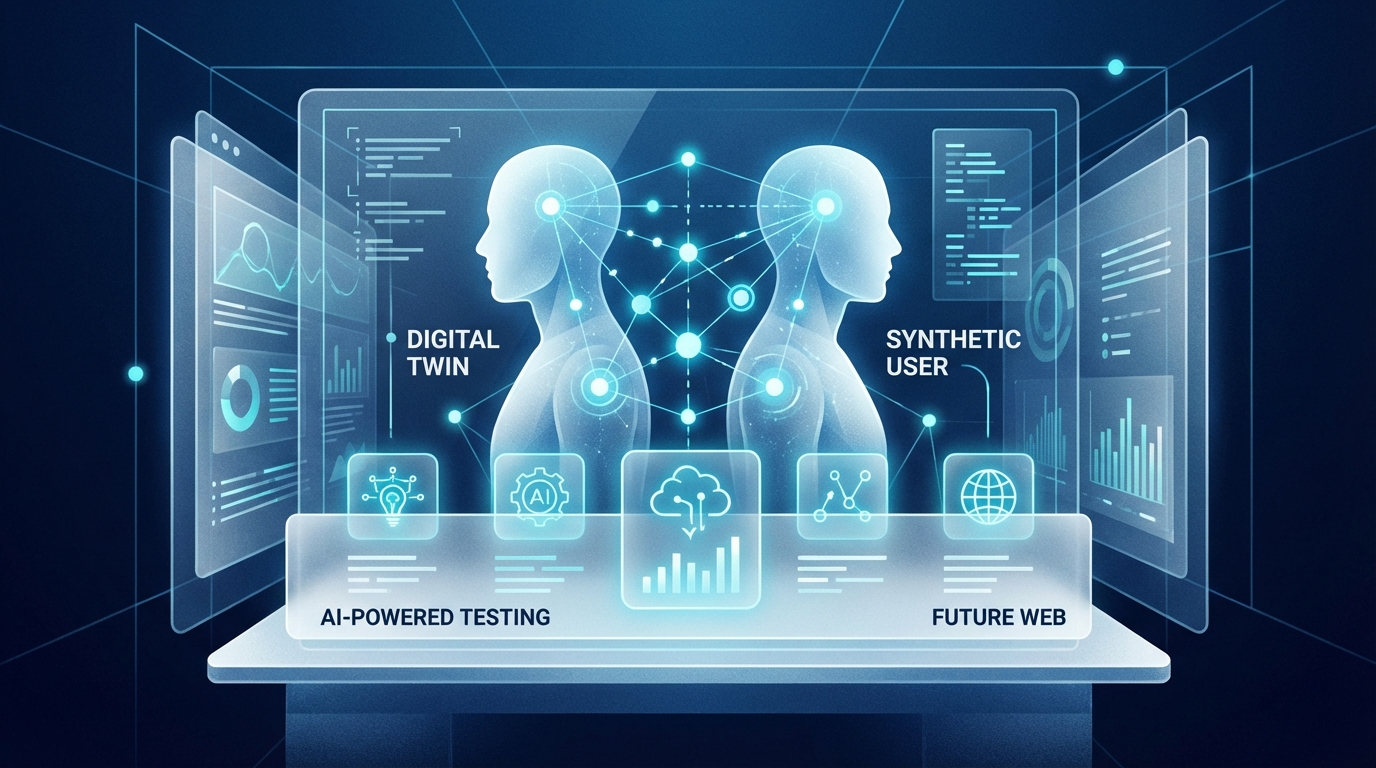
Synthetic user testing involves creating AI agents—digital twins—that mimic real human behavior, preferences, and cognitive biases. These agents are programmed with specific personas: the "skeptical shopper," the "hurried professional," or the "tech-averse senior."
Once these personas are defined, the AI interacts with your landing page, navigation menus, and checkout flows. It reports back on where it got confused, what information was missing, and which calls-to-action (CTAs) were most compelling.
Why 2026 is the Year of the Digital Twin
The jump from simple heatmaps to synthetic users is driven by the depth of modern AI. Previous tools could show you *where* people clicked, but they couldn't tell you *why*.
1. Velocity of Optimization
Instead of waiting two weeks for a focus group, you can iterate on a landing page design five times in a single afternoon. Each iteration is tested against synthetic cohorts, allowing you to "pre-optimize" your UX before launch.
2. Radical Cost Reduction
Hiring ten people for a 30-minute test can cost upwards of $1,000 when you factor in recruitment fees and incentives. Synthetic testing costs pennies per run, making deep UX research accessible to small businesses (SMBs) for the first time.
3. Elimination of Observer Bias
Human participants often suffer from the Hawthorne Effect—they behave differently because they know they’re being watched. Synthetic users have no ego; they follow their programmed logic without trying to please the researcher.
Want a fast score before you touch the site?
Use the free Website Grader to get an instant trust, UX, SEO, and performance score, then decide if you need the full AI review.
Open the Free Website Grader →How to Implement Synthetic Testing in Your Workflow
Define Your Personas
Don't just test against a "generic user." Use your SiteInsight AI data to build personas based on your actual traffic. If your data shows a high bounce rate from mobile users in the UK, create a persona that reflects those specific demographics and connection speeds.
Map the Critical Path
What is the one thing you want the user to do? Whether it's signing up for a newsletter or completing a high-ticket purchase, define that path. The AI agents will then attempt to traverse this path, noting every point of "friction."
Analyze the "Internal Monologue"
The most valuable output of synthetic testing is the narrative log. The AI can generate a transcript of its "thoughts" as it browses: *"I see the button, but I'm not sure if clicking it will charge my card immediately. I'm looking for a 'money-back' guarantee but don't see it above the fold."*
The Hybrid Future: AI + Humans
Synthetic testing isn't here to replace humans; it’s here to make human testing more effective. Use AI to catch the low-hanging fruit—broken links, confusing navigation, and poor contrast. Then, once the site is 90% optimized, bring in real users to capture the nuance that only a biological brain can provide.
Conclusion
In a world where attention is the scarcest resource, you cannot afford to "guess" your way to a high conversion rate. AI-powered synthetic user testing provides a level of precision that was previously reserved for Silicon Valley giants. By integrating these digital twins into your design process, you're not just building a website; you're engineering an experience.
---
**Keywords:** Synthetic user testing, AI UX design, website optimization 2026, user experience research, digital twins marketing.
Turn this article into a real benchmark
Start with the free Website Grader for an instant score, then move to the full AI scan when you want page-level recommendations.
Open the Free Website Grader →