Beyond Semantic Search: Designing for AI-First Content Discovery
Why keywords are no longer the king of SEO. Learn how to structure your content for AI-first search engines and conversational discovery in 2026.
Free tool
Grade your website before you keep reading
Most readers want a quick benchmark first. Start with the free Website Grader, then come back to this article with a clearer sense of what to fix.
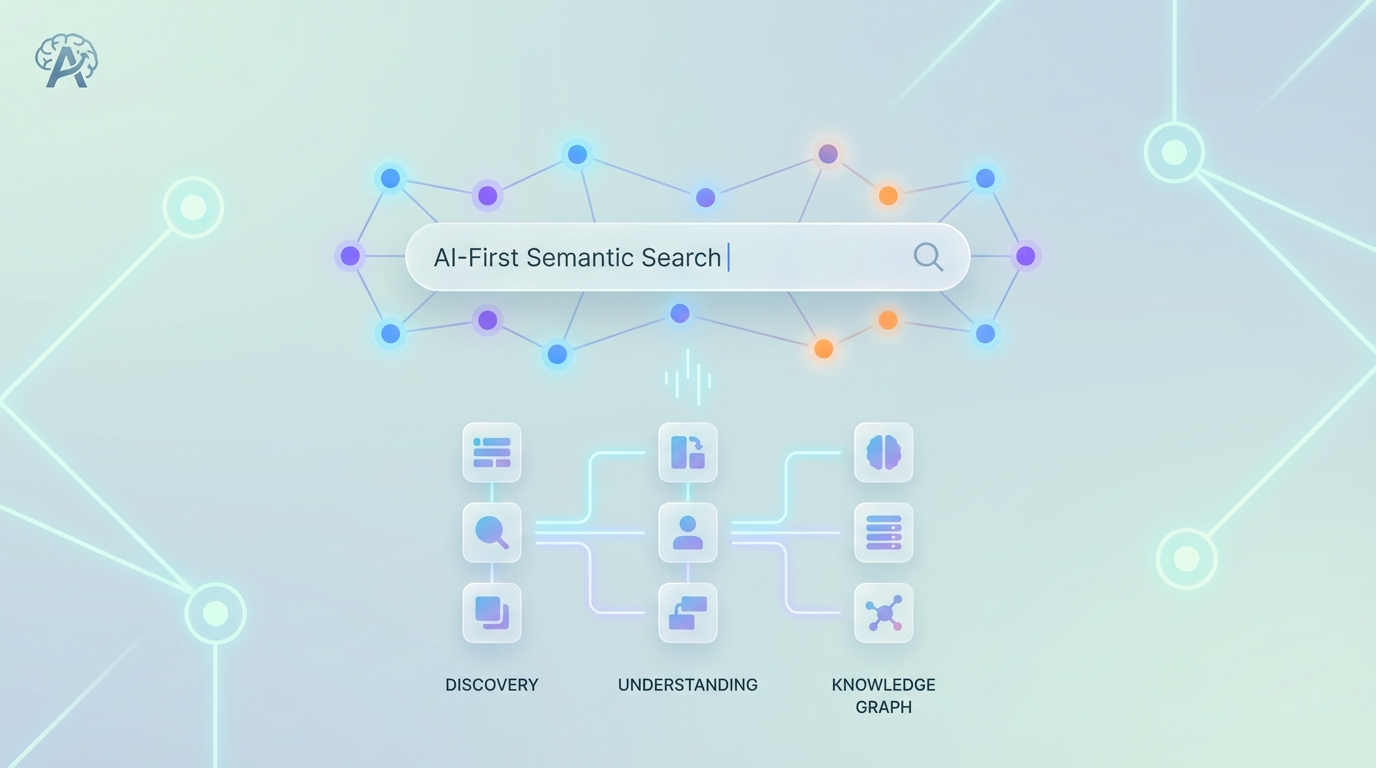
# Beyond Semantic Search: Designing for AI-First Content Discovery
The era of traditional SEO—the era of keywords and backlinks—is effectively dead. In 2026, content is no longer "found" on a search results page; it is "synthesized" into an AI answer.
If your content isn't structured for AI-first discovery, you're not just losing rank; you're losing visibility. Whether it’s Siri, Google Gemini, or specialized AI assistants, the discovery process is now conversational, and your content needs to be ready.
The Paradigm Shift: From Keywords to Concepts
Search engines have moved past simple keyword matching. We’ve been living in the world of "semantic search" for a few years, but "AI-first discovery" takes it a step further. It's not about what you say; it’s about what your content *implies*.
1. Intent is the New Algorithm
AI doesn't just look for words; it looks for the intent behind the query. If a user asks "how do I grow my website?" the AI will look for a comprehensive answer, not just a list of SEO tips. Your content must address the "why" and "how," not just the "what."
2. The Rise of the "Source Citation"
In the world of AI overviews, being the primary source is everything. AI engines look for authoritative, original data. If your blog post is just a rehash of other people's ideas, it won't be cited as a source in an AI-generated answer.
How to Structure Your Content for AI Discovery
To be discoverable by AI, your content needs to be more than just "readable"—it needs to be "parseable."
Use Clear, Direct Language
Avoid fluff. AI models are trained on clear, logical structures. Use H2 and H3 tags effectively to break down your content into logical chunks. Each section should be able to stand on its own as a direct answer to a question.
Include Structured Data (JSON-LD)
Schema markup is more important than ever. Use it to tell the AI exactly what your content is: an article, a how-to guide, or a product review. The more metadata you provide, the easier it is for an AI to categorize your content.
Focus on "Knowledge Clusters"
Instead of writing 20 short blog posts on 20 different keywords, write one comprehensive "pillar" page and link it to several "cluster" pages. This demonstrates to the AI that you are an authority on a specific topic.
The Content Strategy for 2026: Authority Over Volume
In the past, the advice was "post often." Today, the advice is "post better." One high-quality, original piece of research is worth 100 generic blog posts.
1. Proprietary Data is Gold
If you can provide original data—surveys, case studies, or internal analytics—you are far more likely to be cited by an AI. This is what we call "uncopyable content."
2. Conversational Q&A
Structure some of your content as direct questions and answers. Use the exact phrasing that a user might speak into their phone or type into a chat interface.
Measuring Success in an AI-First World
Traditional metrics like "rank" are becoming less relevant. Instead, look at:
Conclusion
The shift to AI-first content discovery is a massive opportunity for small businesses. By focusing on authority, clarity, and original insight, you can out-compete larger brands that are still stuck in the old "keyword volume" mindset. In 2026, the best content doesn't just rank; it *answers*.
---
**Keywords:** AI SEO, content strategy 2026, semantic search, AI discovery, search engine optimization.
Turn this article into a real benchmark
Start with the free Website Grader for an instant score, then move to the full AI scan when you want page-level recommendations.
Open the Free Website Grader →