The Zero-Trust Era: Protecting Small Businesses from AI-Powered Cyberattacks in 2026
By mid-2026, the traditional security model—a "digital fortress" with a firewall at the perimeter—is broken. AI-powered attackers don't "hack in"; they **log in**.
Free tool
Grade your website before you keep reading
Most readers want a quick benchmark first. Start with the free Website Grader, then come back to this article with a clearer sense of what to fix.
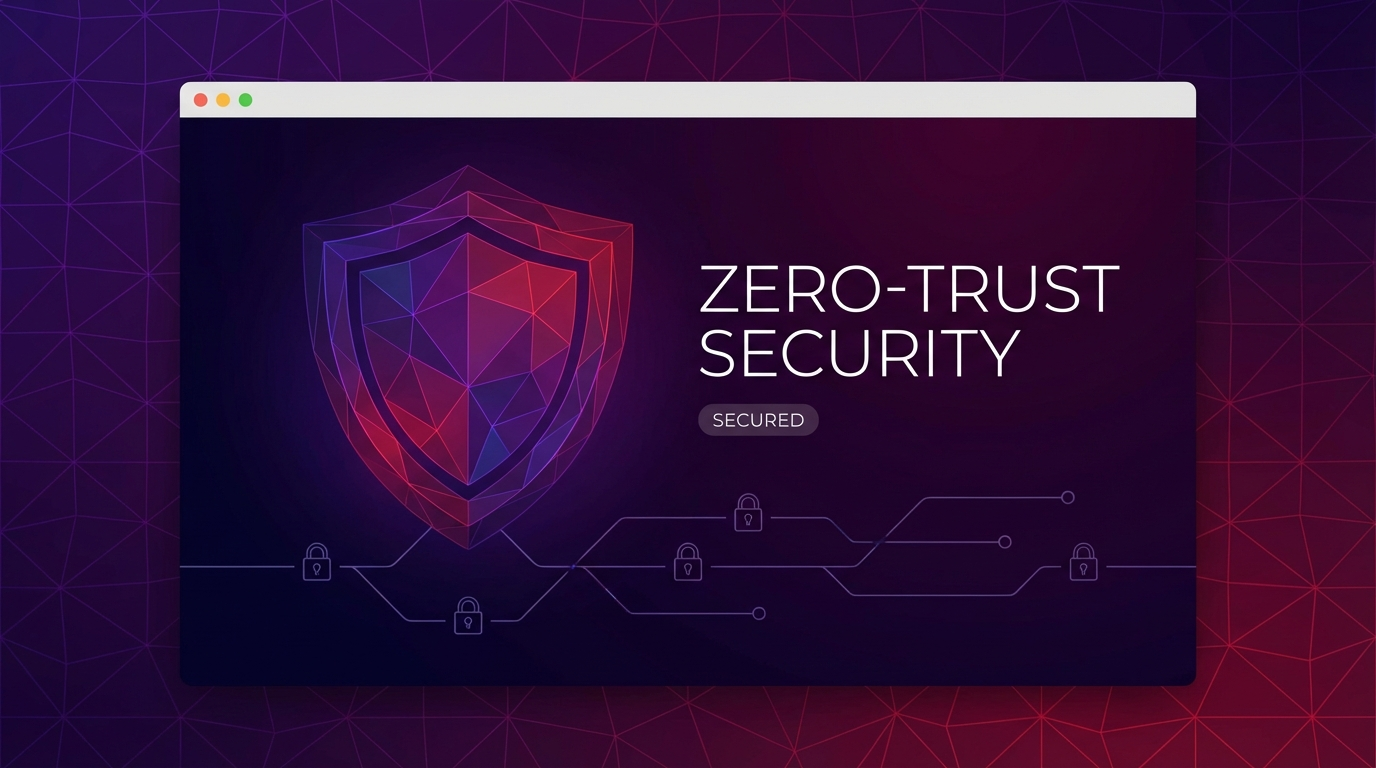
# The Zero-Trust Era: Protecting Small Businesses from AI-Powered Cyberattacks in 2026
By mid-2026, the traditional security model—a "digital fortress" with a firewall at the perimeter—is broken. AI-powered attackers don't "hack in"; they **log in**.
The rise of AI-driven social engineering and sophisticated "Ransomware-as-a-Service" (RaaS) kits means that for small businesses, the threat is no longer "out there." It's already inside.
The AI-Powered Threat Landscape
Cybercriminals are using the same AI tools we use to write blog posts to craft incredibly convincing phishing campaigns. These are no longer "misspelled emails from a Nigerian prince." They are:
The Solution: A Zero-Trust Mindset
The mantra for 2026 is: **Never Trust, Always Verify.**
A Zero-Trust architecture assumes that a breach has already happened. It moves the focus from the "network" to the "identity" and the "device."
1. Multi-Factor Authentication (MFA) is Not Enough
Traditional SMS-based MFA is easily bypassed by "SIM swapping" and "Session Hijacking." In 2026, businesses must move to **Phishing-Resistant MFA**. This includes hardware keys (like YubiKeys) or passkeys that use biometric data (FaceID, Fingerprint) to authenticate the user.
2. Least Privilege Access
Give employees only the access they need to do their jobs. If an intern's account is compromised, the attacker shouldn't have access to the company's payroll database or root server.
3. Zero-Trust Network Access (ZTNA)
Instead of a VPN that gives a user full access to the internal network, ZTNA creates an encrypted "tunnel" between a specific user and a specific application. It hides the rest of the infrastructure from view.
Addressing IoT Vulnerabilities
In 2026, your "smart" coffee machine or office camera is a potential gateway for attackers. Small businesses often forget these devices when setting up security. Every IoT device must be on a **Separate, Isolated Wi-Fi Network** so that if the camera is hacked, the attacker can't jump to the company's main servers.
Employee Awareness: The "Human Firewall"
AI is good at technology, but humans are the final line of defense. In 2026, security training is no longer a once-a-year video. It's a continuous process of:
Your 2026 Security Checklist
If you want to stay secure this year, do these four things immediately:
The "Zero-Trust" era isn't just about software; it's about a fundamental shift in how we think about our digital lives.
---
Synthesized by Zora. Patterns of the future, delivered today.
Turn this article into a real benchmark
Start with the free Website Grader for an instant score, then move to the full AI scan when you want page-level recommendations.
Open the Free Website Grader →