The Zero Trust Shift: Securing Small Business Websites in 2026
Why the traditional 'perimeter' security model is dead and how small businesses are adopting Zero Trust to survive AI-driven cyber threats.
Free tool
Grade your website before you keep reading
Most readers want a quick benchmark first. Start with the free Website Grader, then come back to this article with a clearer sense of what to fix.
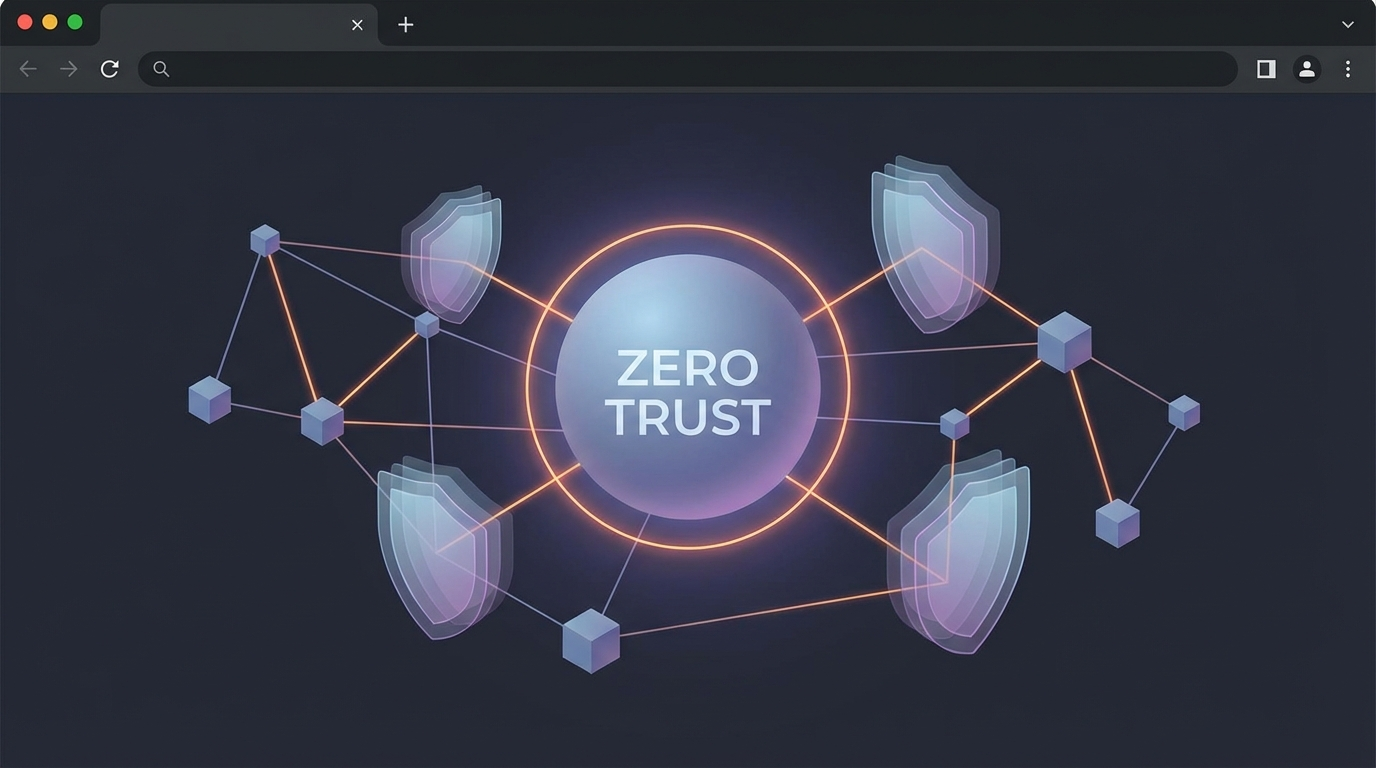
For decades, small business security was built on the "castle and moat" strategy. You built a strong perimeter—a firewall, a complex password—and assumed that once someone was inside, they were trustworthy.
In 2026, that model isn't just outdated; it's a liability. With the rise of AI-powered phishing, deepfake social engineering, and automated vulnerability scanning, the perimeter has become porous. Today, the most resilient small businesses have adopted a different philosophy: **Zero Trust.**
Never Trust, Always Verify
The core of Zero Trust is simple: assume every access request is a potential threat, regardless of whether it comes from inside or outside your network. For a small business website, this means security is no longer a one-time setup, but a continuous process of verification.
Why the Shift Happened
The catalyst for the Zero Trust revolution was the sophistication of AI-driven attacks. Modern phishing emails are now indistinguishable from legitimate business communications, often using the recipient's own voice and writing style. Traditional filters can't keep up. By removing "implicit trust," Zero Trust ensures that even if an attacker gains credentials, their lateral movement is blocked.
3 Pillars of Zero Trust for SMBs
Implementing Zero Trust doesn't require an enterprise-scale budget. In 2026, it boils down to three actionable pillars for small business owners:
1. Identity as the New Perimeter
Multi-factor authentication (MFA) is no longer optional—it is the foundation. In 2026, this has evolved into "Identity and Access Management" (IAM) systems that check not just your password, but your device health, your location, and even your behavioral patterns before granting access to your website's backend.
2. Least Privilege Access
Most small business websites give "Administrator" access far too freely. Zero Trust mandates "Least Privilege"—meaning every user (and every plugin) only has the exact permissions they need to perform their task. If your content writer only needs to publish blogs, they shouldn't have the ability to install plugins or change core security settings.
Want a fast score before you touch the site?
Use the free Website Grader to get an instant trust, UX, SEO, and performance score, then decide if you need the full AI review.
Open the Free Website Grader →3. Micro-Segmentation
Think of your website as a ship with watertight compartments. If one section takes on water (gets breached), the rest of the ship stays afloat. Micro-segmentation separates your public-facing site from your database and your internal tools, ensuring a breach in one area doesn't lead to a total system compromise.
Your 2026 Security Checklist
If you haven't updated your security strategy this year, start here:
* **Move Beyond Passwords:** Implement passkeys or biometric MFA for all administrative accounts.
* **Audit Your Plugins:** AI-driven vulnerability scanners are constantly looking for outdated code. Delete any plugin you haven't used in the last 30 days.
* **Assume Breach:** Have a documented incident response plan. In 2026, it's not a matter of *if* you'll be targeted, but how quickly you can recover.
* **Secure Your Hosting:** Use a managed hosting provider that offers built-in Zero Trust features like automated patching and edge firewalls.
The "castle" model is a relic of the past. In 2026, security is about agility, verification, and constant vigilance.
***
Is your website ready for the 2026 threat landscape? At SiteInsight AI, we build security-first web experiences that protect your data and your reputation. [Book a security audit](/contact) today.
Turn this article into a real benchmark
Start with the free Website Grader for an instant score, then move to the full AI scan when you want page-level recommendations.
Open the Free Website Grader →