Beyond the Map: Local SEO for Service-Area Businesses
How do you rank locally when you don't have a storefront? We dive into the unique challenges and opportunities of Local SEO for service-area businesses.
Free tool
Grade your website before you keep reading
Most readers want a quick benchmark first. Start with the free Website Grader, then come back to this article with a clearer sense of what to fix.
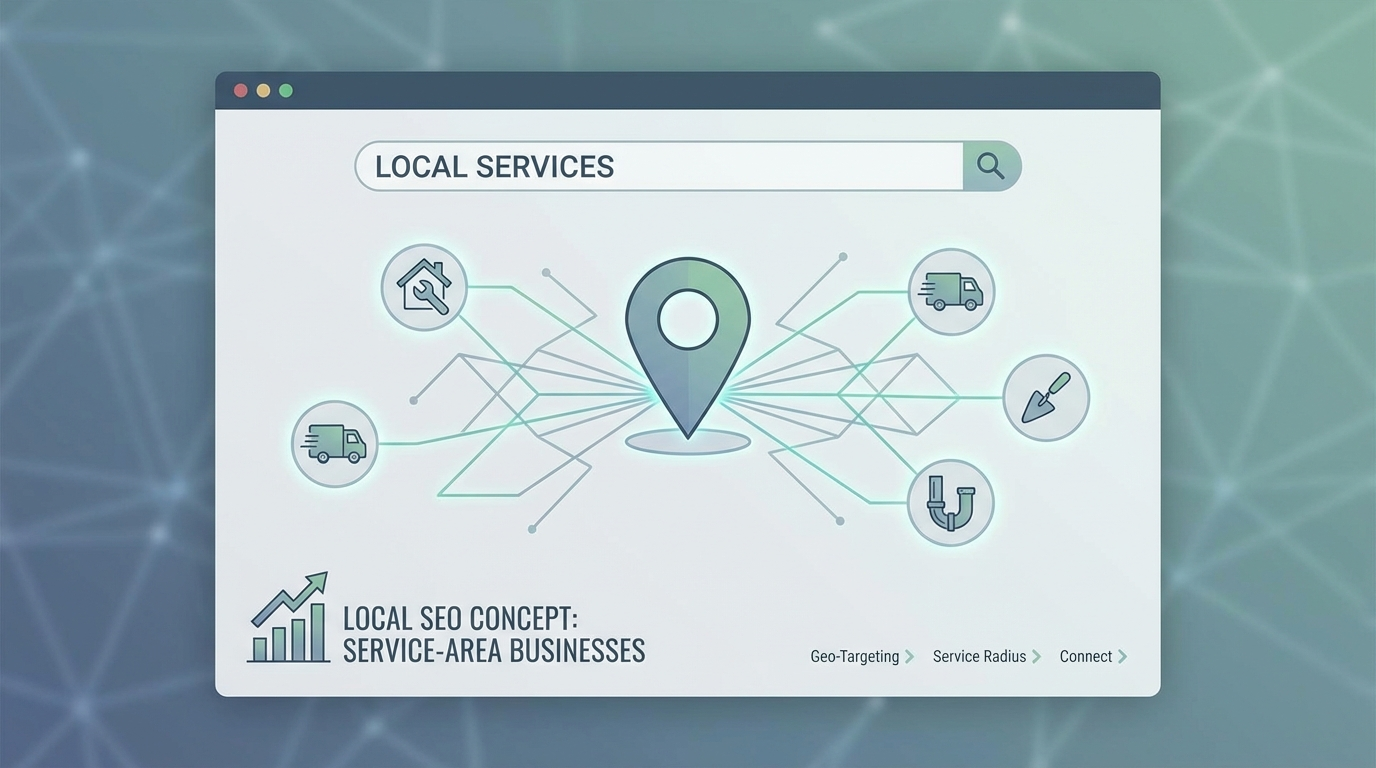
# Beyond the Map: Local SEO for Service-Area Businesses
If you’re a plumber, an electrician, or a mobile pet groomer, you have a unique problem: you go to your customers, but they find you through a map.
For years, Local SEO was easy for businesses with a physical storefront. You verified your address, got some reviews, and you showed up in the "Map Pack." But for Service-Area Businesses (SABs)—those that operate at the customer's location—the rules are different and often more frustrating.
In 2026, Google’s understanding of "proximity" has evolved. It’s no longer just about where your office is (if you even have one); it’s about where you actually work.
1. The Proximity Paradox
Google traditionally prioritized the physical distance between the searcher and the business's registered address. For a home-based business, this often meant you only ranked for searches in your immediate neighborhood, even if you served the entire city.
**The Strategy:** Don't just list your service areas in your Google Business Profile (GBP). Create dedicated "City Pages" on your website. A page for "Plumbing Services in Swanley" with specific local details, landmarks, and project photos from that area signals to Google that you are a legitimate local authority in that specific zone.
2. Evidence of Work: The New Ranking Factor
By 2026, "Check-ins" and geo-tagged photos have become crucial. If you’re at a job site, take a photo and upload it to your GBP. This provides "Proof of Service" in that location.
Google’s AI can now analyze the metadata and the visual content of these photos to verify that you are actually performing the services you claim in the locations you say you serve. This is far more powerful than just typing a list of zip codes into a settings panel.
3. The Power of Hyper-Local Reviews
A review from a customer in the same town where the search is happening carries more weight than a generic review from a different city.
**The Strategy:** When asking for reviews, encourage customers to mention their city or neighborhood. "The team was great at fixing our leak in West Kingsdown" is worth ten "Great service" reviews for your local rankings in West Kingsdown.
4. Local Service Ads (LSAs)
For SABs in competitive niches, the Map Pack is increasingly dominated by paid Local Service Ads. These are the "Google Guaranteed" listings that appear at the very top.
While organic SEO is a long-game, LSAs are the fastest way to build trust and visibility in a specific service area. In 2026, the most successful SABs use a "hybrid" approach: organic SEO for long-term authority and LSAs for immediate lead flow.
Conclusion
Local SEO for service-area businesses isn't about "gaming" the map; it's about proving you are the most relevant, trusted expert in the neighborhoods you serve. Stop worrying about your office address and start focusing on documenting the work you do in the field.
Turn this article into a real benchmark
Start with the free Website Grader for an instant score, then move to the full AI scan when you want page-level recommendations.
Open the Free Website Grader →