Beyond the Dashboard: Decision-First Web Analytics in 2026
How AI is transforming website analytics from passive data collection into an active decision-making engine for growth.
Free tool
Grade your website before you keep reading
Most readers want a quick benchmark first. Start with the free Website Grader, then come back to this article with a clearer sense of what to fix.
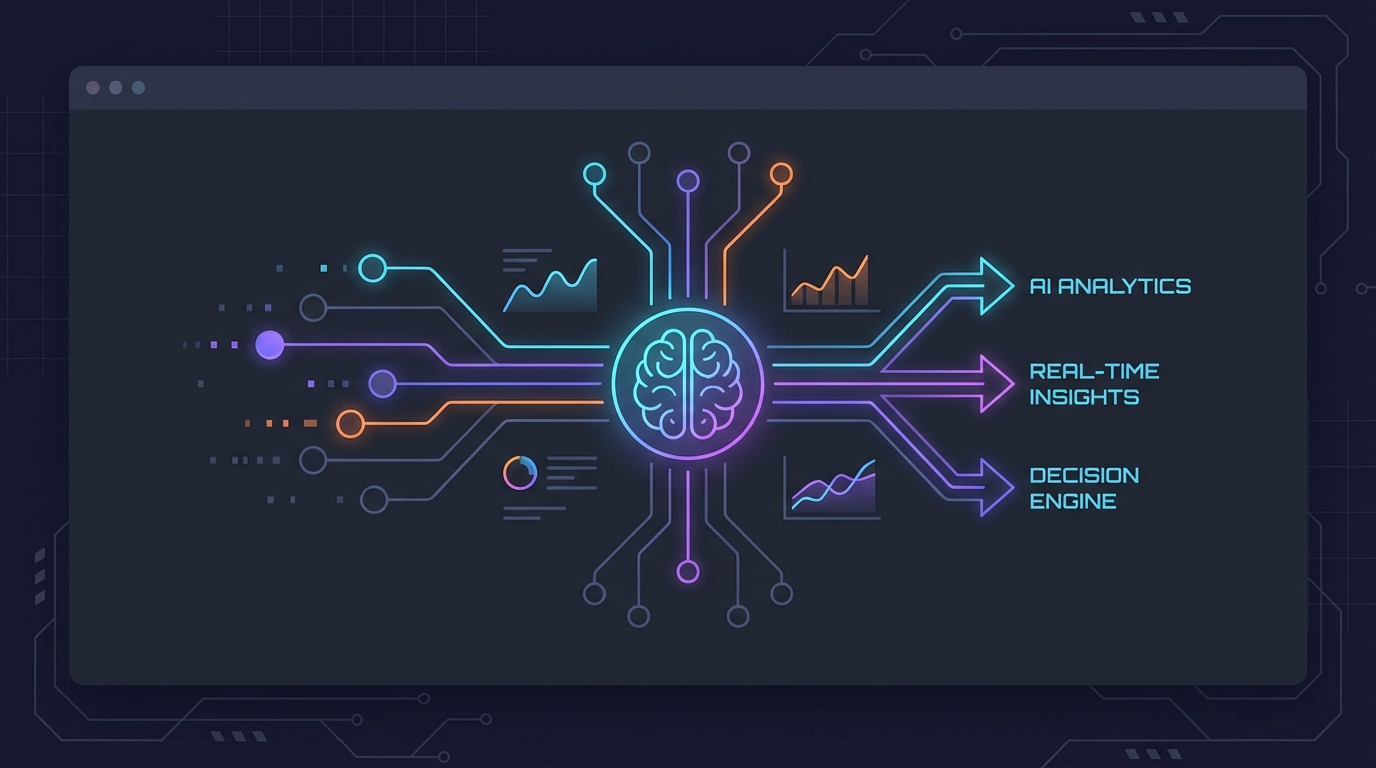
In the early 2020s, website analytics was a game of dashboards and metrics. We measured bounce rates, session durations, and page views, often ending our analysis with the question: *“So what?”*
Fast forward to 2026, and that gap between data and action has vanished. We have entered the era of **Decision-First Analytics**. Driven by agentic AI and real-time edge processing, modern analytics tools no longer just tell you what happened; they tell you what to do next.
The Death of the Passive Dashboard
Traditional dashboards are essentially rearview mirrors. They show you where you’ve been, but they offer little guidance on where you’re going. In 2026, leading businesses are moving away from visual spreadsheets toward natural language decision engines.
Instead of hunting through a Google Analytics 4 report for conversion bottlenecks, site owners now ask their AI analytics agent: *“Why did mobile checkouts dip yesterday?”*
The answer comes back not as a chart, but as a diagnosis: *“A layout shift on the checkout page caused by a recent plugin update increased friction for Safari users by 22%. I have drafted a fix and prepared an A/B test variant to recover the lost revenue.”*
Key Shifts in 2026 Analytics
1. Predictive Intent Over Historical Clicks
AI now predicts user intent in real-time. By analyzing micro-behaviors—mouse velocity, scrolling patterns, and hesitation pauses—analytics platforms can predict if a visitor is likely to convert or bounce within the first 10 seconds. This allows for dynamic site adjustments, such as triggering a personalized offer or simplifying the layout before the user leaves.
2. Edge-Processed Privacy
With the final sunset of third-party cookies, privacy-first analytics have moved to the "edge." Data is processed directly in the visitor's browser or on local servers, stripping personal identifiers before the data ever reaches a central database. This ensures compliance with global privacy standards while maintaining high-fidelity insights.
Want a fast score before you touch the site?
Use the free Website Grader to get an instant trust, UX, SEO, and performance score, then decide if you need the full AI review.
Open the Free Website Grader →3. Natural Language Interaction
The primary interface for analytics is no longer a mouse; it's a conversation. "Closed-loop intelligence" means your analytics system is directly connected to your CMS and marketing tools. When you identify a trend, you can execute the response immediately through the same interface.
How to Implement a Decision-First Strategy
To stay competitive in 2026, your analytics setup needs to evolve from collection to execution:
* **Audit Your Metrics:** If a metric doesn't lead to a direct business decision, stop tracking it. Focus on "North Star" metrics that reflect actual growth.
* **Deploy AI-Powered Insights:** Switch to tools that offer automated anomaly detection and proactive recommendations.
* **Connect Data to Action:** Ensure your analytics platform can "talk" to your landing page builder. The goal is a seamless pipeline from *insight* to *implementation*.
The winners of 2026 won't be the companies with the most data. They will be the companies that can turn data into decisions at the speed of thought.
***
Need help transforming your website from a static brochure into a high-performance conversion engine? At SiteInsight AI, we specialize in implementing decision-first analytics and AI-driven optimization strategies. [Contact us today](/contact) to learn more.
Turn this article into a real benchmark
Start with the free Website Grader for an instant score, then move to the full AI scan when you want page-level recommendations.
Open the Free Website Grader →