The Rise of Agentic UX: How AI-Powered Personalization is Redefining Web Design in 2026
Discover how Agentic UX and real-time AI personalization are transforming website conversions and user retention in 2026. Learn to implement adaptive design.
Free tool
Grade your website before you keep reading
Most readers want a quick benchmark first. Start with the free Website Grader, then come back to this article with a clearer sense of what to fix.
# The Rise of Agentic UX: How AI-Powered Personalization is Redefining Web Design in 2026
In 2026, the static website is officially a relic of the past. If your visitor is seeing the same homepage layout as every other user, you aren't just behind the curve—you're losing revenue to competitors who have embraced **Agentic UX**.
The shift from reactive interfaces to proactive, autonomous systems (AI Agents) has fundamentally changed what users expect from a digital experience. They no longer want to "search" or "navigate"; they want the interface to understand their intent and present the solution instantly.
What is Agentic UX?
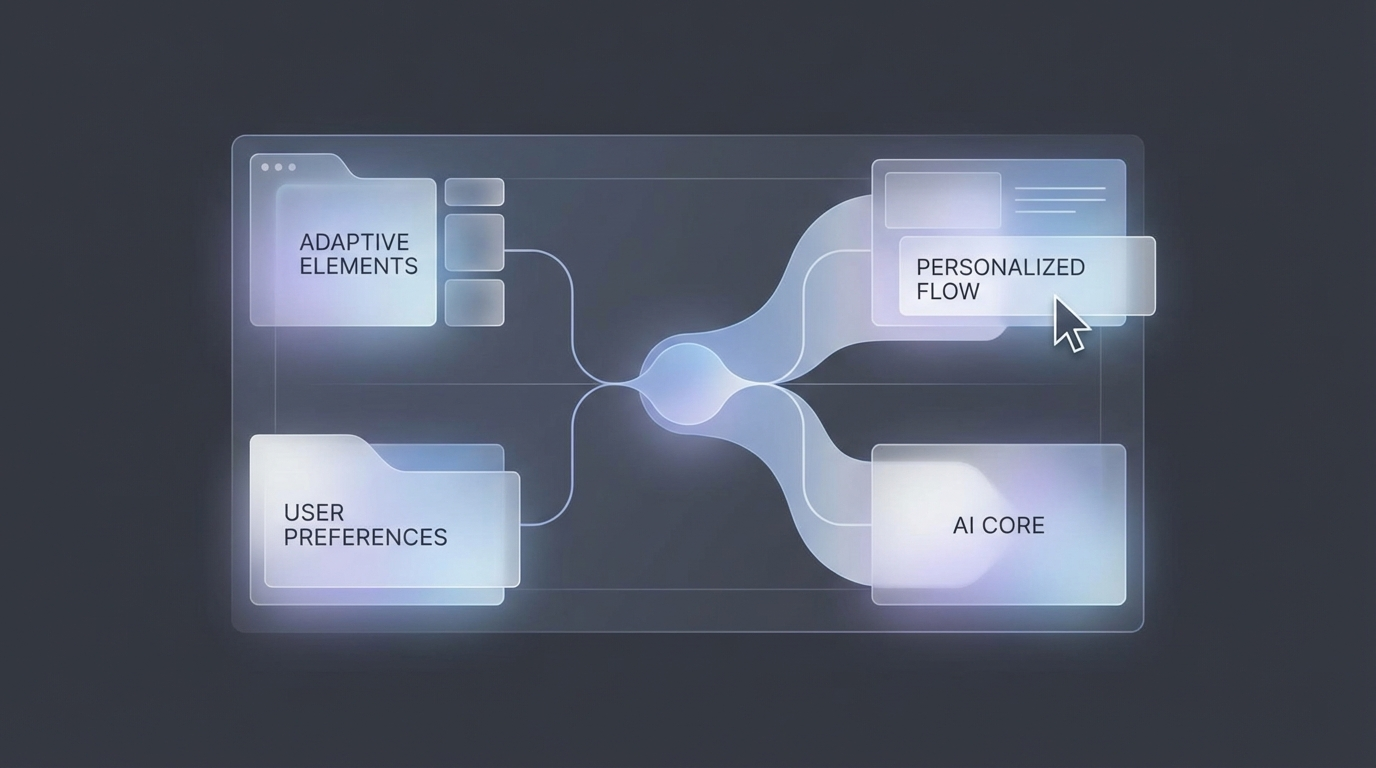
Agentic UX refers to user interfaces that don't just wait for a click—they anticipate it. By leveraging real-time data processing and large language models (LLMs) integrated directly into the browser, modern websites can now reorganize their structure, tone, and content based on the visitor’s current context.
Imagine a SaaS landing page that detects a visitor coming from a high-growth fintech startup. Instead of a generic "Scale Your Business" headline, the site dynamically shifts its hero section to "Automated Compliance for Fintech Pioneers," prioritizes security certifications in the social proof section, and adjusts the pricing calculator to focus on API throughput.
Why Real-Time Personalization is the New Standard
The data from early 2026 is clear: **Adaptive interfaces see a 42% higher conversion rate** compared to traditional A/B tested variants. Why? Because A/B testing solves for the "average" user, while Agentic UX solves for the *individual*.
1. Intent Recognition vs. Cookie Tracking
We've moved past simple cookie-based tracking. Modern AI web tools analyze "mouse-flow" patterns, scroll velocity, and semantic interactions to determine if a user is in "research mode," "comparison mode," or "buy mode."
2. Zero-Click Information Delivery
With the rise of AI Overviews and search agents, users are conditioned to get answers without digging. Your website must act like an agent. If a user lands on your blog, the sidebar shouldn't just show "Related Posts"; it should show an AI-generated summary of how your product solves the specific problem discussed in the article they are currently reading.
Implementing Adaptive Design: 3 Actionable Steps
You don't need a multi-million dollar R&D budget to start implementing these principles.
Step 1: Semantic Content Tagging
Standard metadata is no longer enough. Your content needs to be "machine-readable" for AI agents. Use schema markup not just for SEO, but for your internal site agent to understand which "Lego blocks" of your site (testimonials, features, CTAs) best match a specific user intent.
Step 2: Dynamic Component Swapping
Instead of building five different landing pages, build one landing page with three "adaptive zones." Use lightweight JS libraries that interface with your analytics provider to swap components in real-time. Start with the Hero Section and the Primary CTA.
Step 3: Predictive Friction Removal
If a user hesitates at your checkout page or hovers over a complex feature description for more than 5 seconds, don't wait for them to leave. Trigger an autonomous "micro-guide" or a simplified summary that addresses the likely confusion.
The Ethical Frontier: Trust is the Ultimate Currency
As interfaces become more "agentic," transparency becomes critical. Users in 2026 are savvy; they know when a site is adapting to them. The key to high conversion isn't "tricking" the user with personalization, but rather saving them time. Always ensure your AI-driven adaptations are clearly aimed at utility, not manipulation.
Summary: The Future is Fluid
The websites winning in March 2026 are those that feel like a conversation, not a catalog. By embracing Agentic UX and AI-powered personalization, you transform your website from a static brochure into a proactive sales agent that works 24/7 to meet every visitor exactly where they are.
---
**Related Articles:**
Turn this article into a real benchmark
Start with the free Website Grader for an instant score, then move to the full AI scan when you want page-level recommendations.
Open the Free Website Grader →